If you’re considering an attached pergola, but don’t know if it would be the right option for your space and budget, then this guide is for you. Below are the benefits and drawbacks of installing an attached pergola you should know before contacting a pergola contractor.
What Is An Attached Pergola?
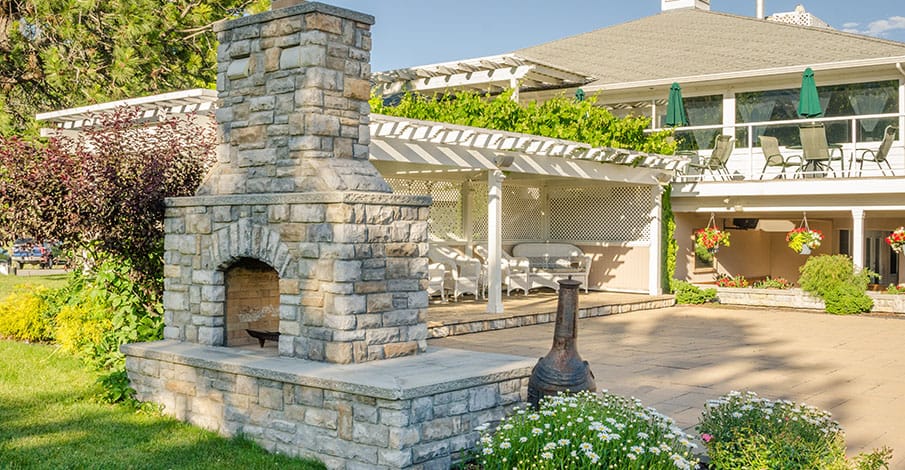
As the name suggests, an attached pergola is directly attached to the house’ exterior. It creates a seamless transition from the indoors to the outdoors and it also costs less than freestanding pergolas.
What are freestanding pergolas? They are built as standalone structures, so they are not directly connected to any other structure, such as the home’s exterior.
Pros Of Attached Pergolas
Cost Effective
One of the major benefits attached pergolas have over freestanding pergolas is the cost-effectiveness. As one side of the pergola is connected to the house, there are usually only two posts required for a standard-sized pergola.
In some cases, you can have a pergola built that doesn’t have any posts and gets all the support from the exterior wall of the house. Less posts, mean less work too, which translates to lower labor costs as well.
In any case, an attached pergola is cheaper. This makes it a good budget-friendly option. Even if you choose the exact same materials as you would for a freestanding pergola, building an attached pergola can save you 10% to 30% of the costs.
Seamless Integration
Attached pergola are anchored to the home’s exterior wall so they offer a seamless integration. So, the pergola would look like a natural extension of the house.
This is great for people who don’t want their outdoor living space to be away from the house. Moreover, this also makes using the outdoor space easier and convenient, and you’re more likely to spend some time on your patio, deck, or yard, under the pergola.
Excellent For Small Backyards
An attached pergola offers shade and style without taking too much of space. So, it’s a great choice for small backyards where space is limited. It doesn’t only make the transition from the indoors and outdoors seamless, but it can also make the backyard appear bigger. On top that, the yard will become more useful as well.
Perfect For Decks
Even though attached pergolas are not limited to decks, they are perfect for deck because decks are usually connected to the house so an attached pergola will make sense and look a part of the design. Plus, this will add shade and more utility to the deck.
That said, if you have a backyard patio attached to the house or very near your home’s wall, an attached pergola will fit in perfectly with it too.
Provide More Shade
Pergolas can be shaded or breezy as you want them to be. You can use a retractable canopy to cover the pergola’s slats or even build a full-blown roofed pergola. However, if you don’t want to spend a lot on a roof and need just a bit more shade, an attached pergola offers you that.
It’s a natural feature of wall-mounted pergolas to offer more shade than freestanding pergolas because there is literally a wall on their one side. So, slightly more protection again the sun and wind even when the pergola has a regular slatted roof.
Can Be More Private
Tying in with the above point, the fact that there is a wall on side of the pergola and that it’s attached to the home’s exterior, these pergolas can be and may feel more private spaces compared to freestanding pergolas that are usually in the middle of the backyard.
If you like privacy, you add screens or greenery to make any outdoor space private, however, this benefit of attached pergolas doesn’t cost anything extra.
Adding Utilities Is Easier
Connecting lighting, fans, and other utilities can be difficult to freestanding pergolas and patios. However, as an attached pergola is very near the indoors, you can add utilities to your outdoor space more easily.
This will make the outdoor space an outdoor room instead of an isolated space. So, if you fancy something like that, attached pergolas are for you. Get in touch with custom pavilion builders Long Island for ideas and installation.
Cons Of Attached Pergolas
Limited Flexibility
As the structure is connected to the house, there is limited design and placement flexibility with attached pergolas.
The placement is the primary limitation. Instead of your convenience, the placement will be determined by the location of the exterior wall. So, the choices may be limited. Moreover, other features of an attached pergola may make it less unique. For instance, it must be connected to the house, there will be two posts, etc.
That said, you can choose any material, color, finish, and style as long as it’s practical for an attached pergola.
Poor Installation Can Cause Problems
Attached pergolas require proper installation. If not installed correctly, the structure could put stress or weight on the wall, creating structural problems. Moreover, poor installation can create gaps from where water may leak into the house. This can become a huge problem if ignored, as mold and water damage can cause long-term structural damage.
Can’t Be Attached To Any Wall Difficult
Speaking of installation, attached pergola can’t be attached to every wall. If the wall to the backyard is lightweight, damaged, has waterproofing layers, or some other issues, it won’t be suitable for an attached pergola. Similarly, if there is a gutter system in the way, the installation may become difficult.
Permit Requirement And Stricter Regulations
An attached pergola is treated as a structural addition so you must get a permit before doing anything. However, the drawback of attached pergolas is that there are stricter regulations because of them being attached to the home’s wall. For comparison, some freestanding pergolas in some states don’t even require a permit.
So, if you’re building an attached pergola consult the local building authority to ensure you follow the guidelines and regulations to avoid fines or a forced removal of the structure.
Difficult To Maintain
Although the maintenance requirements of a pergola primarily depends on the material you choose, building an attached pergola can make maintenance difficult because one side of the pergola may become hard to reach. So, it may become difficult to paint, stain, or repair the pergola.
Plus, due to the one side of the pergola staying hidden because of the wall, you may not be able to spot issues in that area as quickly, leading to costlier repairs later.
Reduced Airflow
It was mentioned in the benefits of attached pergolas that they provide more shade. However, this can be a disadvantage as well because a wall on one side means there will be reduced airflow. This can be a problem in the summer.
However, you can subside this issue by using fans and avoiding any screens or big furniture for the other three sides of the pergola.
Conclusion
Attached pergolas can make your deck, patio, or yard more of a living space. However, they have some pros and cons you should remember before deciding on the type of pergola you need. For advice and proper installation, consult custom pergola builders Port Jefferson.